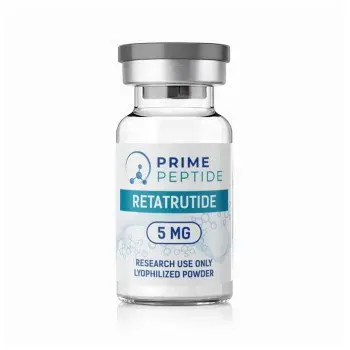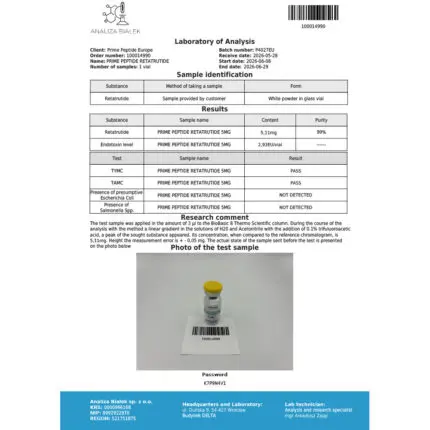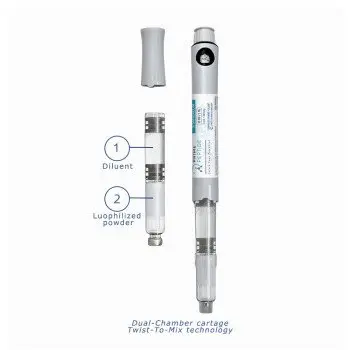


Retatrutide | Pre-Filled Pen
Price range: 161,25 € through 248,75 €
Retatrutide is a new-generation synthetic peptide developed as a triple receptor agonist that simultaneously activates GLP-1, GIP and glucagon receptors. This makes it one of the most innovative molecules in current research on metabolism and body composition.
What is Retatrutide (Retatrutide)?
Retatrutide is a new-generation synthetic peptide developed as a triple receptor agonist that simultaneously activates GLP-1, GIP and glucagon receptors. This makes it one of the most innovative molecules in current research on metabolism and body composition.
The peptide was originally created by the pharmaceutical company Eli Lilly with the aim of enhancing the effects of conventional GLP-1 therapies through combined action on several key hormonal pathways. Unlike standard solutions that target only appetite or glucose, Retatrutide affects simultaneously energy intake, energy expenditure and metabolic regulation.
The GLP-1 component suppresses appetite and slows stomach emptying, GIP improves insulin sensitivity, and the glucagon effect increases energy expenditure. It is this combination that makes Retatrutide significantly more powerful than previous generations of peptides.
The development of Retatrutide began around 2018–2019, and to date the peptide is in a late phase of clinical trials and is considered one of the most promising future therapies for obesity and metabolic syndrome.
What are the benefits of Retatrutide (Retatrutide)?
Retatrutide is one of the most powerful compounds in metabolic research because it combines appetite control, increased energy expenditure and a profound effect on metabolism.
-
Significant reduction in body weight
Clinical studies show a reduction of over 20 to 24 per cent of body mass, placing it above most existing therapies.
-
Appetite control
Activating the GLP-1 and GIP receptors leads to a clear reduction in hunger and easier control of eating.
-
Increased energy expenditure
The glucagon component increases energy burning, which is a key difference compared with Semaglutide and Tirzepatide.
-
Accelerated breakdown of fat
The combined mechanism supports lipolysis and reduces adipose tissue.
-
Improving insulin sensitivity
Retatrutide supports better blood sugar control and reduces insulin resistance.
-
Improving glucose control
Leads to more stable blood glucose levels through combined action on several hormonal pathways.
-
Improving the lipid profile
Associated with reduced triglycerides and improved fat metabolism.
-
Effect on visceral fat
Shows potential to reduce deep abdominal fat, which is the most metabolically risky.
-
Support for cardiovascular health
Through its effects on weight, glucose and lipids, it influences the main risk factors.
-
Stronger combined effect compared with other peptides
Retatrutide is the only one of the three that simultaneously reduces appetite and increases energy expenditure, which explains the better results.
Clinical trials on Retatrutide (Retatrutide)
Retatrutide is the subject of intensive clinical research, which shows some of the strongest results in this category.
In key Phase II clinical studies, a reduction in body weight of up to around 24 per cent is observed, with a significant reduction in waist circumference, improved glucose control and improved lipid profile.
The results show a clear dose-dependent effect, with higher doses leading to a more pronounced reduction in weight.
At present, Retatrutide is in Phase III clinical trials, which will determine its final profile and potentially approval for medical use.
Current data position it as potentially the most powerful weight-control peptide to date.
Correct intake and dosage of Retatrutide (Retatrutide) within a research protocol
Retatrutide is administered via a subcutaneous injection once a week, with the main principle being a gradual and controlled dose increase in order to achieve optimal tolerability and minimise side effects.
In most research protocols, treatment starts with an initial dose of around 1 – 2 mg per week, after which the dose is increased in stages every 4 weeks up to 4 mg. With good tolerability and depending on the protocol goals, you may move to higher doses of 6 mg to 8 mg per week.
This type of titration allows a gradual adaptation to the peptide’s combined mechanism, which affects appetite, energy expenditure and metabolic regulation simultaneously.
The protocol duration usually ranges between 12 and 24 weeks, and for longer-term studies a cyclical approach is often used with rest periods, in order to assess the effect and restore sensitivity.
Gradually increasing the dose is a key factor because it significantly reduces the risk of gastrointestinal reactions and improves overall tolerability of the peptide.
Possible side effects from Retatrutide (Retatrutide)
As with other peptides in this class, side effects are most commonly associated with the gastrointestinal system and are dose-dependent.
Most common:
- nausea
- vomiting
- diarrhoea
- constipation
- reduced appetite
Less common:
- abdominal pain
- dizziness
- headache
- gastrointestinal discomfort
In most cases, symptoms are mild to moderate and occur mainly at the beginning of the protocol, after which they decrease with adaptation.
Comparison of Retatrutide with other GLP-1 peptides
Retatrutide is often compared with Semaglutide and Tirzepatide because all three molecules are among the strongest modern peptides for weight control and metabolic disorders. The difference is that Semaglutide acts as a GLP-1 receptor agonist, Tirzepatide is a dual agonist of GIP and GLP-1, and Retatrutide is a triple agonist that activates GLP-1, GIP and glucagon receptors. This triple activation is why Retatrutide is considered a next-generation metabolic peptide.
Compared with Semaglutide, Retatrutide has a broader mechanism of action. Semaglutide is an excellent choice for reducing appetite, improving glycaemic control and reducing weight, and in the fight against obesity it is established at doses up to 2.4 mg per week. In clinical studies with Semaglutide, weight reduction is typically around 15 per cent in longer research protocols, which makes it highly effective but still more limited in metabolic scope than Retatrutide.
Compared with Tirzepatide, Retatrutide once again has one important step forward. Tirzepatide combines GIP and GLP-1 and is significantly stronger than the classic Semaglutide, being approved for the fight against obesity and overweight and in practice it is used at doses up to 15 mg per week. It shows very strong results for weight reduction, but Retatrutide also adds a third mechanism through the glucagon receptor, which provides potential for higher energy expenditure and a more aggressive effect on fat tissue.
In terms of effectiveness, the available clinical data place Retatrutide at the top in this category. In Phase II studies, Retatrutide shows weight reduction of up to around 24 per cent, while Tirzepatide typically moves lower and Semaglutide remains one more step behind. This does not mean the other two peptides are weak; it means that Retatrutide currently appears to be the most powerful molecule in this class.
In the shortest terms, Semaglutide is an excellent choice when you’re looking for a proven and stable GLP-1 effect, Tirzepatide is the next level with a stronger effect on weight and glucose, and Retatrutide is regarded as the most complex and most aggressive option for research into body composition and metabolic control.
Information on this website is collected and summarised from multiple scientific studies and analyses.
It is purely for informational purposes and is not intended for the diagnosis, treatment or prevention of diseases.
The products offered on the site are not classified as medicines or medical devices and are suitable solely for laboratory and research purposes.
| Quantity | 10mg/3ml, 20mg/3ml |
|---|