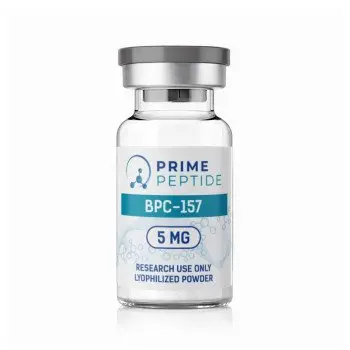
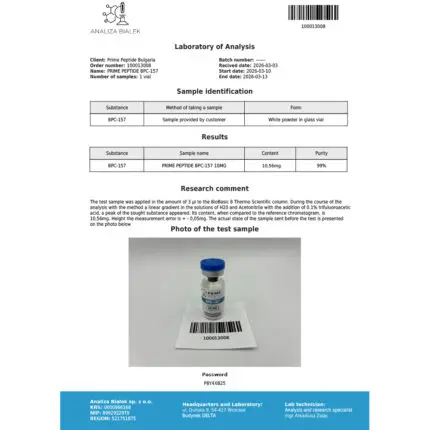
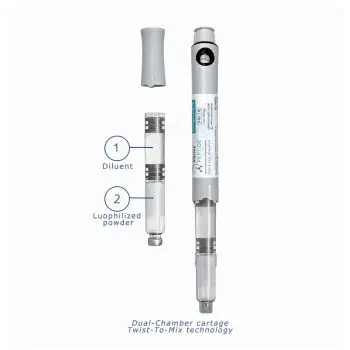
BPC-157 (Body Protection Compound-157) is a synthetic peptide composed of 17 amino acids, derived from protein and naturally found in gastric juice. Initially, it was studied for its protective effect on the gastrointestinal tract, but over time it became clear that its action is much broader.
The peptide draws serious attention due to its ability to influence key cellular processes related to tissue repair and regeneration. One of the most important mechanisms associated with it is angiogenesis — the process of forming new blood vessels. This is critical for delivering oxygen and nutrients to damaged areas and significantly accelerates recovery.
BPC-157 has been studied across a wide range of applications, from muscle injuries, tendons and joints to inflammatory conditions and tissue damage. The data show that it may support not only recovery, but also the protection of various organs and systems in the body.
Because of these properties, the peptide is used in research related to sports physiology, recovery after injuries, surgical procedures and chronic inflammatory processes.
BPC-157 is especially popular among active athletes, as it supports faster recovery, reduces the risk of injury and allows a quicker return to training.
The peptide is not approved as a medicinal product by the FDA or EMA and is used mainly in scientific and research settings.
What are the benefits of BPC-157?
BPC-157 supports the healing of muscles, tendons and ligaments.
It is associated with improved recovery of various tissues in the body.
Supports joint health and cartilage tissue.
Stimulates the formation of new blood vessels and improves blood supply.
-
Support for the gastrointestinal tract
It is associated with the protection and recovery of the stomach lining.
Helps reduce inflammatory processes.
-
Improved recovery after operations
It is associated with faster healing after surgical procedures.
It is being studied for a protective effect on the liver, heart and other tissues.
-
Improved sports performance
Supports faster recovery and better endurance.
It is associated with processes related to the healing of bone tissue.
Clinical trials on BPC-157
BPC-157 is the subject of multiple preclinical studies that show significant potential for tissue recovery and accelerating healing processes.
In scientific models, accelerated recovery of muscles, tendons and joints has been observed, along with improvement in inflammatory conditions. Data indicate that the peptide supports cellular regeneration by improving blood supply and activating processes related to the growth of new tissues.
Additional research examines its effect on chronic inflammations, noting potential for reducing the inflammatory response and improving overall condition.
In the context of sports science, the results show faster recovery after exertion and better adaptation of the body to physical stress.
Proper use and dosage of BPC-157
BPC-157 is typically administered via subcutaneous injection, and in research protocols doses in the range of 250 to 500 mcg per day are most often used.
The application can be taken once or split into two doses per day, and it is often used locally near the problem area for a more targeted effect.
The duration of use typically ranges from several weeks to 3 months, depending on specific needs and goals.
Possible side effects of BPC-157
BPC-157 is considered a well-tolerated peptide, and at the moment there is no serious data on severe side effects with proper use.
Mild stomach discomfort, nausea or slight redness at the injection site may be observed, which are usually short-lived.
Comparison of BPC-157 with other peptides
BPC-157 vs TB-500
Both peptides are among the most popular for recovery. TB-500 is more often associated with cellular migration, mobility and systemic recovery, while BPC-157 is better known for local regeneration, tendons, the gastrointestinal tract and broader tissue protection.
BPC-157 vs GHK-Cu
GHK-Cu is more strongly targeted towards skin, collagen, hair and aesthetic regeneration. BPC-157 is a more functional choice for injuries, tendons, joints and sports recovery.
BPC-157 vs KPV
KPV is a short-chain peptide with mainly anti-inflammatory and barrier-focused effects, especially for skin and the gut. BPC-157 has a more pronounced regenerative profile on tissues and mechanically loaded structures.
BPC-157 vs Growth Hormone (HGH)
Growth Hormone (HGH) is an exogenous growth hormone with wide-ranging effects across the whole body, including IGF-1, metabolism, recovery and body composition. BPC-157 is not a hormonal agent and does not work through the GH axis, but through local regenerative and protective mechanisms.
Information on this website is compiled and summarised from multiple scientific studies and analyses.
It is purely for information and is not intended for diagnosing, treating or preventing diseases.
The products offered on the site are not classified as medicines or medical devices and are suitable solely for laboratory and scientific research purposes.